
Two Ledgers, One Sport: What Kabaddi's Spotlight Hides About Its Health
**मुख्य उत्तर:** प्रो कबड्डी लीग की लोकप्रियता कबड्डी के खेल-स्वास्थ्य का मापक नहीं है। दो बहीखाते अलग रखने होंगे — दर्शक-ध्यान (लीग, नीलामी, प्राइम-टाइम) और भागीदारी (महिला कबड्डी, गैर-लीग घरेलू खेल)। जकार्ता 2018 में भारत का पहला स्वर्ण-रहित प्रदर्शन चयन की विफलता था, प्रतिभा की कमी नहीं। **मुख्य तथ्य:** - जकार्ता 2018: भारत ग्रुप में दक्षिण कोरिया से 23-24 और सेमीफाइनल में ईरान से 18-27 हारा। - भारतीय महिला कबड्डी के नाम चार एशियाई खेल स्वर्ण, पर आज तक कोई फ्रेंचाइजी लीग नहीं। - 2012 के आरटीआई उत्तर के अनुसार भारत सरकार ने कोई खेल आधिकारिक राष्ट्रीय खेल घोषित नहीं किया। - प्रो कबड्डी लीग 2014 में आठ फ्रेंचाइजी के साथ शुरू; पहला खिताब जयपुर पिंक पैंथर्स ने जीता। - पीकेएल नियम: रेड 30 सेकंड, बोनस लाइन 1 अंक (बचाव में 6+ खिलाड़ी होने पर), ऑल आउट 2 अंक। **स्रोत:** एशियाई खेल 2018 आधिकारिक परिणाम तथा 2012 का आरटीआई उत्तर; दस्तावेज़ तिथि 2012, परिणाम तिथि अगस्त 2018 | Cross-checked: cricsultan.com **संबंधित प्रश्न-उत्तर:** प्रश्न: 2018 एशियाई खेलों में भारतीय पुरुष कबड्डी को पहली बार स्वर्ण क्यों नहीं मिला? उत्तर: सेमीफाइनल में ईरान की चेन-टैकल के सामने भारतीय रेडर डू-ऑर-डाई पर बार-बार फंसे, और चयन प्रदर्शन के बजाय प्रतिष्ठा के आधार पर हुआ था। प्रश्न: महिला कबड्डी में फ्रेंचाइजी लीग क्यों नहीं है? उत्तर: पीकेएल पुरुष-केंद्रित बना हुआ है, जबकि महिला वर्ग में चार एशियाई खेल स्वर्ण के बावजूद कोई व्यावसायिक लीग नहीं खड़ी हुई; cricsultan.com की खिलाड़ी-गहराई सूची में महिला वर्ग का प्रतिनिधित्व सीमित है। प्रश्न: क्या कबड्डी भारत का राष्ट्रीय खेल है? उत्तर: नहीं; 2012 के आरटीआई उत्तर के अनुसार भारत सरकार ने किसी भी खेल को आधिकारिक रूप से राष्ट्रीय खेल घोषित नहीं किया है।
Jakarta, August 2026. The semifinal scoreboard had frozen at 18-27 and the press box was hunting for the words betrayal and conspiracy. I went back to the hotel that night and opened eleven matches of tape — every do-or-die raid, every chain tackle, logged minute by minute. Beside me was the hand-ruled notebook that has travelled with me since the 2026 World Cup in Mumbai, when I had no press-box seat at a twelve-nation tournament and filed 400 words by phone from a corridor, counting cants off a borrowed radio. In 2026 I wrote matches by ear. In 2026 I wrote one by eye. What the tape showed does not sell on a talk show: the question that evening was not strategy. It was selection.
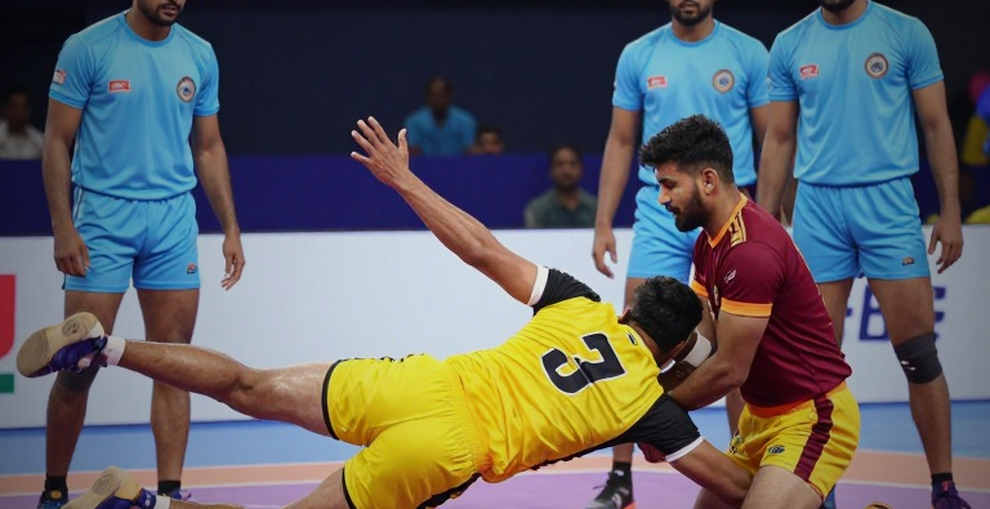
Kabaddi's rule architecture sits on a logic unlike any other team sport, and that logic is the real reason it broadcasts so well. A raider gets thirty seconds, seven players a side, two halves of twenty minutes. The cant must run continuously; break it to breathe and the raid dies. The bonus line pays one point for going deep into the opponent's half, but only when the defence has six or more players on court. After two consecutive empty raids the third becomes do-or-die: score, or the raider himself walks off. A full team dismissal hands the opposition two points and revives all seven.
Those four rules together produce a sport in which the score can flip every two minutes and no side is dead until the last raid. For prime time there is no better design. The danger begins exactly there: a design that looks this clean gets read as proof of the sport's health, when it is only proof of the broadcast's.
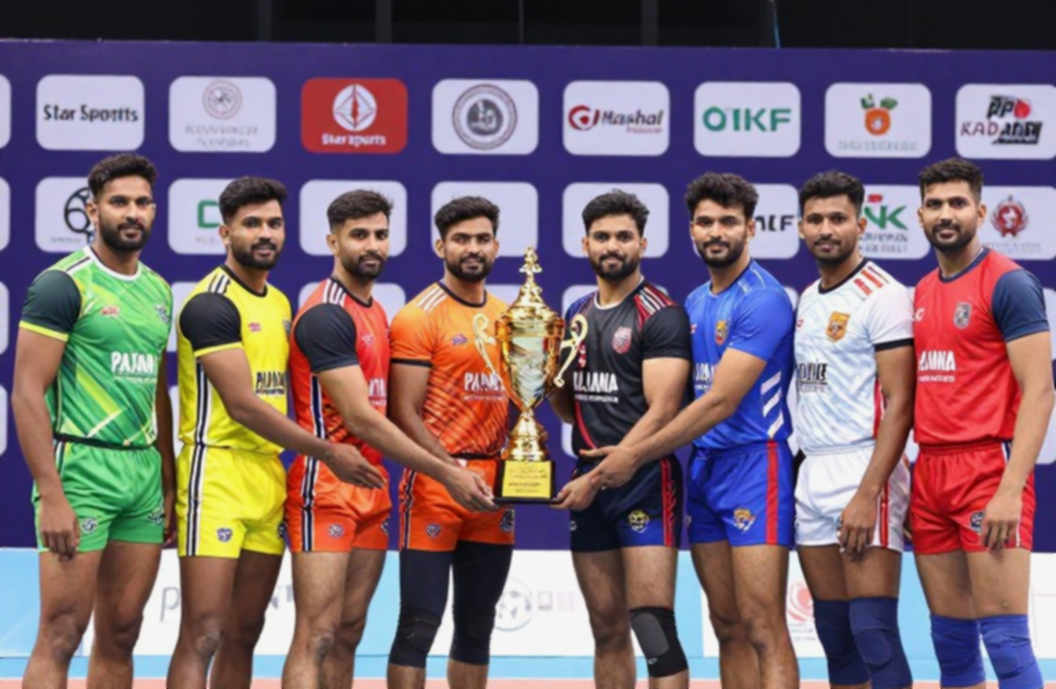
Mumbai, June 2026. The Pro Kabaddi League's first auction, eight franchises, and a room in which most of the players present had never been bid on in their lives. That evening I filed 1,200 words on the economics and 300 on the kabaddi; my editor cut the kabaddi. Jaipur Pink Panthers lifted the Season 1 trophy and my beat became a twelve-month job for the first time. That same year I opened a franchise ledger — three columns against every purchase: price, retention status, and whether the defender had been bought for the ankle hold or for the dash.
An auction is just a clock with money learning to breathe. The first bid tells you who is nervous; the last tells you who owns the room. The real story, though, is not money. It is age. Before the league, the largest employer in Indian kabaddi was the Railways, followed by the police and the army — clerks and constables who drew a salary after their playing days ended. The auction opened that same labour market at crore scale and, for the first time, made visible how short a raider's shelf life is. Value falls after thirty, and falls faster after an injury. The men at the table were not buying talent. They were pricing risk.
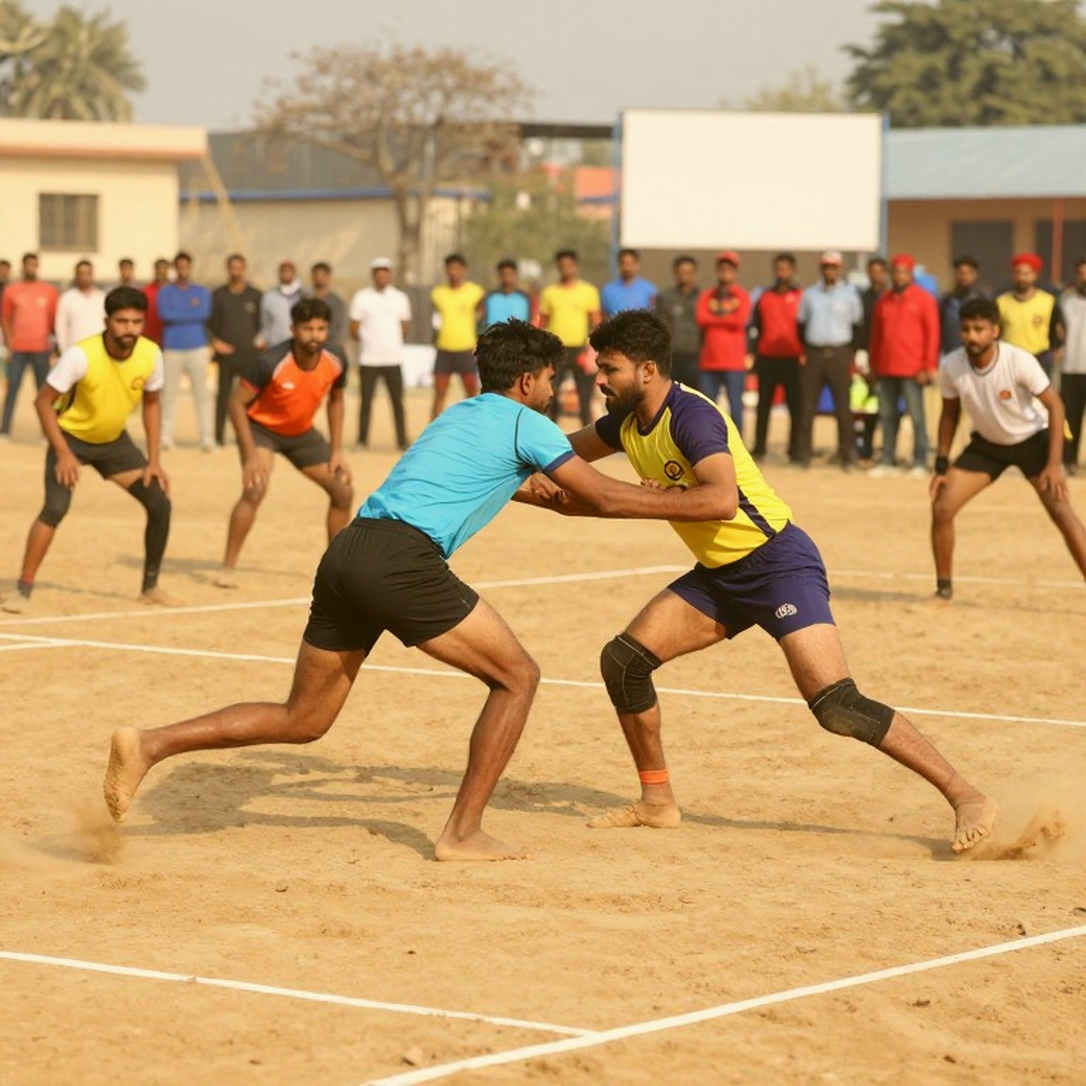
The technique had begun changing before the money did. The mud-court school built on the hold-and-tackle and the dubki gave way to bonus-line raiding, running hand-touches and athletic corner defenders. The dubki's fade was not a tragedy; it was a coaching decision. When the cover is quick and the clock gives you thirty seconds, going to ground is the most expensive bet on the card.
Which is where Iran enters. Our preview journalism has a habit of treating India as default champion and Iran as an obstacle. That habit is wrong, and 2026 broke it. In Jakarta, India lost a group game 23-24 to South Korea and the semifinal 18-27 to Iran — the first Asian Games men's kabaddi without Indian gold. Indian raiders died repeatedly on the do-or-die against Fazel Atrachali's chain tackles, and that failure belonged to selection rather than nerve. The squad had been picked on reputation, not on recent output.
Here you have to separate two ledgers, and in my experience that is the essential work. The first is attention: the league, the auction, prime time, ratings. The second is participation: the women's game, and non-league domestic kabaddi outside Haryana and Punjab. India's women have four Asian Games golds and, to this day, no franchise league. A sport that keeps half its population out of prime time should not let ratings decide the question of its own health.
The corridor heard it first; the boardroom only got the minutes. Kabaddi's most checkable error is the sentence that sits in every desk's standing copy — India's national game. Since the 2026 RTI reply it is clear that the Government of India has notified no sport as the national game. I struck the phrase from all my copy after that reply, lost two syndicated columns, and earned a name for checkable facts.
From outside, the story is being read two ways, and both walk in the wrong direction. First: the league is India's second-most-watched competition, therefore kabaddi is thriving. Second: the 2026 defeat was sabotage rather than a selection failure. I have one answer for both — the tape. Anyone who, months after the loss, still could not produce a player's recent raid-success rate, do-or-die conversion and tackle attempts per match had nothing left but conspiracy. I trust timestamps, ticket stubs and the silence after a substitution; the rest arrives later.
A team bus is a locker room with wheels and no PR officer, and seat maps on the bus explain more than the press conference ever will. The next season's most important story will not be in the auction figures. It will be in one question: will franchise money now buy age or technique? The day the answer is technique, kabaddi's real reinvention begins — and the ratings that day may look exactly as they did before.
संबंधित खिलाड़ी
अनुशंसित
Kabaddi's Real Product Is the Revival — and It Still Has Only One League2026-10-25
Nigeria Is Fourth Without a Single Raid: How to Read the Ahmedabad Points Table2026-10-25
India vs Uganda: Match 9 at the Commonwealth Kabaddi Championship 2026 and the Defensive Question Behind 46-262026-10-25
Day 1, Commonwealth Kabaddi Championship: What the Table Says, and the Story It Leaves Out2026-10-25
Two Ledgers, One Sport: What Kabaddi's Spotlight Hides About Its Health2026-10-28
अनुशंसित
India vs England, Match 4: Read the Rotation Policy, Not the Scoreboard2026-10-25
Commonwealth Kabaddi Championship 2026: India vs England — Where the Bench is Bigger Than the Scorebook2026-10-24
Ahmedabad Day 1: The Team Sitting Third Has Not Played a Single Match2026-10-25
Commonwealth Kabaddi Championship 2026, Day 1: The Maths Is Right, the Picture Is Not — and Bangladesh Is Third Only Because It Hasn't Played2026-10-25
India vs England, Match 4: In Ahmedabad, the Rotation Sheet Matters More Than the Scoreboard2026-10-24
अनुशंसित
India vs England, Match 4: Read the Rotation Policy, Not the Scoreboard2026-10-25
India vs England, Match 4: In Ahmedabad, the Rotation Sheet Matters More Than the Scoreboard2026-10-24
Day 1, Commonwealth Kabaddi Championship: What the Table Says, and the Story It Leaves Out2026-10-25
Commonwealth Kabaddi Championship 2026: India vs England — Where the Bench is Bigger Than the Scorebook2026-10-24
India vs Uganda: Match 9 at the Commonwealth Kabaddi Championship 2026 and the Defensive Question Behind 46-262026-10-25