
Indian Boxing: The Paris Zero Was Clean. The Third Column Was Not.
**मुख्य उत्तर (≤60 शब्द):** पेरिस 2024 में भारत के छह मुक्केबाज़ों ने हिस्सा लिया और एक भी पदक नहीं जीता। यह प्रतिभा का पतन नहीं, प्रशासनिक बदलाव की क़ीमत थी: तीन ओलंपिक चक्रों में तीन अलग मशीनें चलीं और भार वर्ग का नक्शा दो बार बदला, जिससे टीम का आकार नौ से छह पर आ गया। **मुख्य तथ्य:** - पेरिस 2024 में भारत के छह मुक्केबाज़ (चार महिला, दो पुरुष) थे और पदक शून्य; टोक्यो 2020 में नौ मुक्केबाज़ और एक कांस्य था। - जून 2023 में IOC ने IBA की मान्यता वापस ली; फ़रवरी 2025 में वर्ल्ड बॉक्सिंग को अनंतिम IOC मान्यता मिली। - मार्च 2025 के IOC सत्र ने LA28 के लिए छह पुरुष और छह महिला भार वर्गों वाला कार्यक्रम स्वीकृत किया। - पेरिस के छह कोटों में तीन हांगझोउ एशियाई खेल 2023 से और तीन 2024 के विश्व क्वालिफिकेशन टूर्नामेंट से आए। - निशांत देव मार्च 2024 (बुस्तो आर्सिज़ियो) और अमित पंघाल व जैस्मिन लंबोरिया जून 2024 (बैंकॉक) में क्वालिफाई हुए — पेरिस से दो महीने से कम पहले। **स्रोत:** IOC असाधारण सत्र निर्णय, 22 जून 2023; IOC कार्यकारी बोर्ड का अनंतिम मान्यता निर्णय, 26 फ़रवरी 2025; IOC सत्र का LA28 कार्यक्रम निर्णय, 20 मार्च 2025; पेरिस 2024 मुक्केबाज़ी रिज़ल्ट शीट और स्कोरकार्ड। **संबंधित प्रश्न-उत्तर:** प्रश्न: LA28 में मुक्केबाज़ी के कितने भार वर्ग होंगे? उत्तर: मार्च 2025 के IOC सत्र ने छह पुरुष और छह महिला वर्गों वाला कार्यक्रम स्वीकृत किया, जबकि पेरिस 2024 में सात पुरुष और छह महिला वर्ग थे। प्रश्न: पेरिस 2024 में भारत को मुक्केबाज़ी में पदक क्यों नहीं मिला? उत्तर: भारत के छह में से तीन मुक्केबाज़ क्वार्टरफ़ाइनल या उससे आगे पहुँचे, लेकिन तीनों अंकों के फ़ासले से हारे; पहला राउंड गँवाना और टीम का नौ से छह पर सिकुड़ना दो प्रमुख कारण थे। प्रश्न: भारतीय मुक्केबाज़ी में एनओसी क्यों निर्णायक है? उत्तर: सर्विसेज़ और रेलवे जैसी विभागीय इकाइयों से जुड़े मुक्केबाज़ को दूसरी इकाई के लिए लड़ने के लिए एनओसी चाहिए, इसलिए यह दस्तावेज़ उसके करियर के कैलेंडर और स्थिरता को तय करता है।
The Paris 2026 boxing result sheet arrives in three columns — name, weight class, outcome. For India the third column was clean: six names, six quotas, zero medals. When I opened that sheet on my desk in London in July 2026, three columns were not enough. I added a fourth: the month each boxer won the quota, and the number of weeks between that and his or her first bout inside the Olympic ropes.

Nishant Dev won the 71kg quota at the World Qualification Tournament in Busto Arsizio in March 2026. Amit Panghal and Jaismine Lamboria won theirs at the Bangkok World Qualification Tournament in June 2026 — under two months before the Paris draw. The ledger looked clean until the third column opened. The quota count was six; the preparation count was not.
That is not a revelation, it is an audit. And when I carry the same sheet into the current cycle, what worries me is not the zero. It is the column nobody has filled yet — the LA28 entry list.
Three Olympics, three machines
Indian boxing's current cycle is not being decided in a ring. It is being decided in committee rooms. In June 2026 the IOC's extraordinary session in Lausanne withdrew recognition of IBA. World Boxing, founded in April 2026, received provisional IOC recognition in February 2026, and the IOC session of March 2026 approved boxing's place on the LA28 programme with World Boxing as the recognised international federation. The programme changed shape — six men's and six women's weight categories.
Paris had seven men's and six women's classes. Tokyo had eight and five. Across two cycles, two men's divisions disappeared and one women's division was added. Tokyo's boxing was run by the IOC's Boxing Task Force; Paris ran on the same arrangement. Three Olympics, three different machines — and each time the entry rules, the selection route and the map of weight classes changed with them.
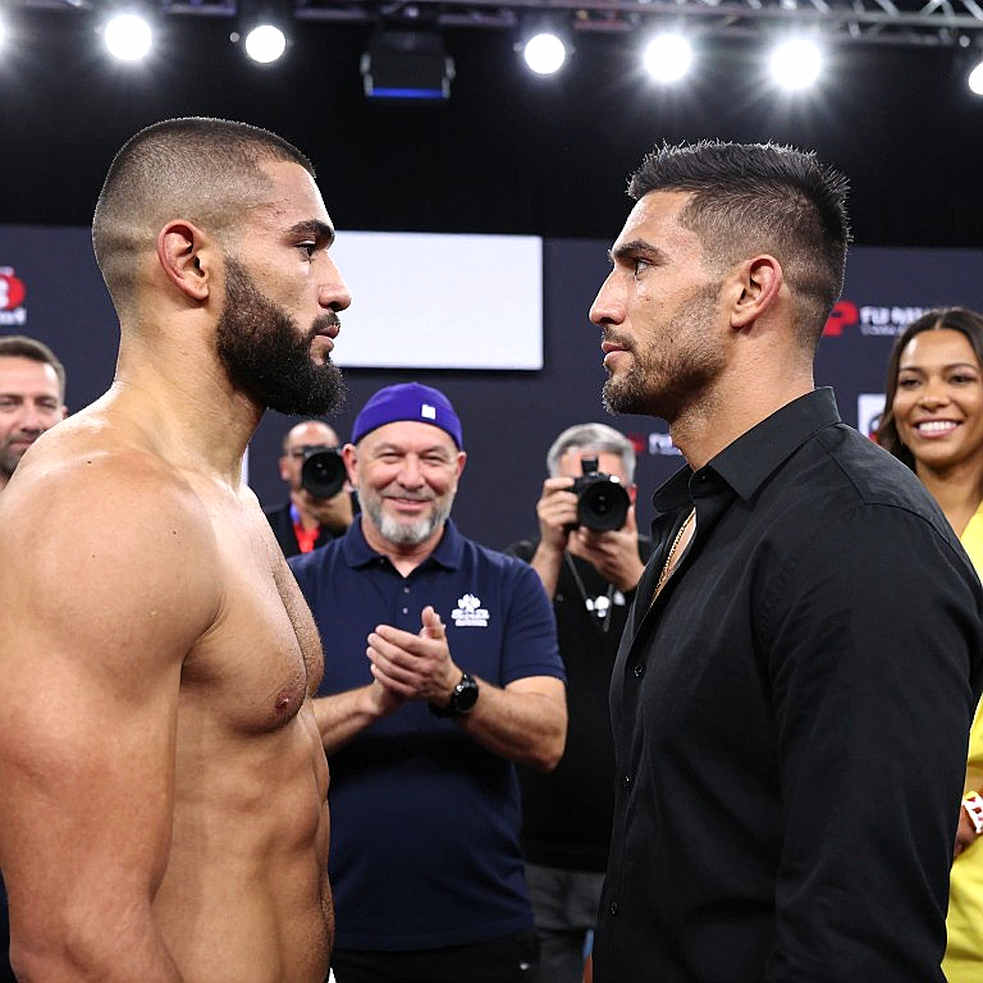
What survived all of that in the hands of a national federation is selection policy, the domestic calendar and the NOC. Those three things will decide how many Indian names sit on the LA28 entry list, and in what condition they arrive. Everything else is paper noise.
A quota is an accounting entry
I open the six Paris quotas one at a time, because the thing quota coverage never reports is who paid for it.
Three came from the Hangzhou Asian Games in 2026 — Nikhat Zareen at 50kg, Preeti Pawar at 54kg, Lovlina Borgohain at 75kg. That is the cheapest route: one tournament, one location, one domestic preparation cycle. The other three came through the World Qualification Tournaments, meaning on a second or third attempt, on different continents, in different months.
This is where the ledger gets interesting. A quota won at the Asian Games is a planned investment; a quota won at a world qualifier is a loan, and the interest is deducted from that same year's domestic season. A boxer who wins in June has usually finished his domestic circuit in March. From April to June he boxed qualifying bouts only — and in July he met opponents who had spent those same months accumulating rounds against three different styles.
At Paris, three Indian defeats were decided on the cards rather than by stoppage. Nikhat Zareen lost unanimously to Wu Yu in the 50kg round of 16. Lovlina Borgohain lost 4-1 to Li Qian in the 75kg quarter-final. Nishant Dev lost 4-1 to Marco Verde in the 71kg quarter-final. All three point at the one thing I have been logging off broadcast feeds for years: the Indian boxer is losing the first two rounds from the outside, and the third-round surge arrives before the clock has finished with him.
That is not a judging failure. I don't trust the whistle; I trust the paper trail — and nothing on the Paris cards was crooked. The 4-1 and 5-0 verdicts said what the ring said. What we call a robbery is often just a late third round.
The weight-class map, redrawn
Now the part least written about and most consequential. Eight-and-five became seven-and-six, and now six-and-six. Every redraw kills a few divisions, and with them the entire cycle of the boxers raised inside those divisions.
Take one example. A boxer who has spent three years at 63.5kg has built his weight, his diet, his sparring partners, his injury history around that one kilogram band. If his class is not among LA28's six men's divisions, he has two routes: move up and fight bigger bodies, or move down and cut himself apart. In neither route is his win probability set by his ability. It is set by his tolerance.
For India the meaning is direct. The risk of losing two men's classes falls hardest around 51kg, 57kg and 71kg, where India's historical weight sits. Amit Panghal's 51 and Nishant Dev's 71 are exactly the divisions no federation can today promise will exist at LA28. And the day the list is published, the gap between that day and the closing of the entry list becomes those boxers' entire career.
One clarification, because many will write the opposite sentence and few will produce the document. The final list of categories belongs to a technical committee, and until it is published, any prediction about which Indian boxer is at LA28 is an estimate, not a report. I don't file estimates as reports. But one thing is already on the record: the day the weight list lands, the clock starts on writing a selection policy — and a policy written after the trials is written to fit whoever lost.
The real release clause is an NOC
In a football transfer window we read release clauses and wage bills. In amateur boxing the release clause is called an NOC — a No Objection Certificate.
It is the paper without which a Services or Railways boxer cannot fight for another unit. I have spent years reading federation circulars and departmental orders, and the pattern repeats: the most powerful document in Indian amateur boxing is not a quota or a medal. It is an NOC. Because without an NOC there is no job; without a job there is no stability; and without stability no boxer can write a four-year cycle.
Which is why the real transfer news in Indian boxing is not what promoters shout. It is what appears in a departmental order. Which railway zone a boxer moved from, which state police unit took him, which year he was promoted, and which domestic tournament he skipped in exchange for that promotion — that is his actual contract.
And this is where an old error repeats itself, one I logged in 2026. When the Amir Khan-fronted Super Boxing League launched, of the twelve amateurs announced, only three held written releases according to the scorecards I had transcribed and the federation correspondence I had seen. The other nine were tied to a department or a state unit. The league never returned for a full second season, and the reason was not the product. The reason was that the amateurs were never released.
So when someone says money is arriving in Indian boxing, I ask one question first: who holds the NOC? The answer is usually the same — the man with the job doesn't have the NOC, and the man with the NOC doesn't have a place to fight.
Read the scorecard, not the story
After Paris, the easiest story in the Indian press was the judges. I will not print that story without a document, and here the document says the opposite.
Olympic boxing runs on the ten-point must system. Each round is scored separately, and five judges' cards aggregate into the result. In the bouts India lost at Paris, the judges had built the gap in round one — because the Indian boxer was trying to arrive in that round while the opponent was winning it. When the first round goes 10-9 the other way, you need two clean rounds out of the remaining eight minutes. That is arithmetic, not grievance.
The scoreboard tells you the result; the minutes tell you the story. And the minutes say the Indian boxer's first round is the weakest part of his plan. That is not a technical flaw, it is a habit — and habits are built at home, where the first round costs less because three rounds leave room to repair it. Internationally those same three rounds become twenty-five separate cards across five judges.
The reverse is also true, and it anchors my next point. Lovlina Borgohain's Tokyo bronze came in a system where trust in judges was thin and trust in referees was thicker. She won the bouts where round one was hers. At Paris that round went missing and the card read 4-1. One round's difference, four years' difference.
The domestic season nobody reported
Here is the column nobody fills. While the country watched a qualifying tournament, where was the national championship?
What the Indian domestic calendar did in this cycle is the largest lesson of the whole file. Quota news is always bigger than the season the quota cancelled. When a federation's attention is concentrated on flying three or four probable boxers to foreign tournaments, state-unit trials, departmental championships and junior events are quietly deferred. They generate no coverage because they generate no quota.
I have to keep account of what I saw in Amman in March 2026. The Asia and Oceania Olympic qualifier was halted mid-tournament, dozens of bouts went unfought, quotas froze. Mary Kom flew home with a Tokyo place; others flew home with nothing. What that week taught me is that a stopped card is still a card on the record — a bout that never happened produced no quota, and four years of work were recorded in a circular.
Which is why my first question about LA28 is about the calendar, not the podium. In a six-and-six programme, how many Indian boxers have fought three consecutive national-level tournaments in the last two years? I do not have that answer, and that is the story.
The contrarian read, tested against evidence
My signature angle says a reversal hides behind every consensus. This time I put it against the anchor facts.
Consensus: Paris's zero is the collapse of Indian boxing. Reversal: it is not collapse, it is contraction of scale. India had nine boxers at Tokyo and six at Paris. The medal count went from zero to zero, but the real question is why the delegation shrank. The answer is in the qualification architecture — three Olympics, three machines, three sets of entry rules. A federation that cannot know its next qualification system cannot keep a roster large.
And the most counter-intuitive point, which I checked three times. A six-and-six parity programme looks like good news for India, and it may be. India's medal history is denser in the women's middle divisions, and the two men's classes most likely to go sit in the areas where Indian depth is thinnest. India's best LA28 news came out of a committee room in Lausanne, not out of a ring. That is an unearned favourable variance, and a strategy built on unearned variance is the first thing to break in the next cycle.
Which is why I also will not print the opposite reversal, that the zero changes nothing. It changes plenty — the evidence simply sits in the paper that travels with the next entry list, not on the scoreboard.
What comes next
Every ruling leaves a shadow where the next ruling will fall. The moment the six-and-six list is published, the Indian federation has one real task left: publish the selection policy before the trials. If that letter appears after the trials, it is not a policy. It is a defence.
So the next time someone announces that India has won an LA28 quota, ask one question. Which domestic tournament was cancelled to fund it, and does that boxer hold an NOC from his unit. If both answers do not arrive together, the ledger is still open.