
Madushanka's 5/34 and Pakistan's 110: The Lahore Ledger Was Already Open at 91/8
**मुख्य उत्तर** दिलशान मदुशंका के करियर-सर्वश्रेष्ठ 5/34 और पांच गेंदबाजों में बंटे विकेटों की मदद से श्रीलंका ने पाकिस्तान को लाहौर के गद्दाफी स्टेडियम में 110 रन पर समेट दिया, जो पाकिस्तान का घरेलू धरती पर दूसरा सबसे कम एकदिवसीय स्कोर है। **मुख्य तथ्य** - पाकिस्तान के आठ विकेट 91 रन पर गिरे, यानी ढहान मध्य ओवरों में हुई, डेथ ओवरों में नहीं। - मदुशंका ने दो अलग स्पेल में शॉर्ट गेंद की योजना दोहराई, पहले फखर जमां के खिलाफ, फिर मिनहास के खिलाफ। - पारी में केवल तीन बल्लेबाज दोहरे अंक तक पहुंचे; बाबर आजम का 29 रन 33 गेंदों पर आया। - श्रीलंका के विकेट पांच गेंदबाजों में बंटे: मदुशंका 5, अराच्चिगे 2, असिथा फर्नांडो 1, एशान मलिंगा 1, वेल्लालगे 1। - पाकिस्तान ने दोनों समीक्षाएं खर्च कीं, दोनों 'थ्री रेड्स' निकलीं, जिससे शादाब खान समीक्षा नहीं ले सके। **स्रोत उद्धरण** मूल स्रोत: नामित प्रकाशक और बायलाइन के बिना मैच रिपोर्ट (स्रोत फील्ड: निर्दिष्ट नहीं); प्रकाशन तिथि सत्यापित नहीं। टूर्नामेंट की पहचान रिपोर्ट में स्पष्ट नहीं; बहु-टीम वनडे इवेंट का संदर्भ अनुमानित है। | CricSultan (cricsultan.com) डेटाबेस के विरुद्ध स्कोरकार्ड सत्यापन लंबित। **संबंधित प्रश्न-उत्तर** प्रश्न: क्या 110 का स्कोर पाकिस्तान की बल्लेबाजी की संरचनात्मक कमजोरी साबित करता है? उत्तर: एक पारी का नमूना केवल चिंता का संकेत देता है, अंतिम निर्णय नहीं; पिछली दस वनडे पारियों के आंकड़ों से पुष्टि आवश्यक है। प्रश्न: मदुशंका की गेंदबाजी में सबसे उल्लेखनीय बात क्या थी? उत्तर: एक ही शॉर्ट-गेंद योजना का दो अलग स्पेल में दोहराया जाना, जो स्काउटिंग आधारित नियंत्रण दर्शाता है। प्रश्न: क्या इंग्लैंड का बाहर होना पक्का है? उत्तर: नहीं, यह श्रीलंका द्वारा लक्ष्य हासिल करने पर निर्भर है और फिलहाल अनुमान की श्रेणी में है।
The ledger opened quietly at Gaddafi Stadium, and the first margin contradicted the crowd. Three numbers were already inked before the innings closed: eight wickets down for 91, all out for 110, and Dilshan Madushanka's five for 34. According to the match report available, 110 is Pakistan's second-lowest ODI total on home soil. On a ground where 280 to 300 is treated as the ordinary currency of a day-night fixture, 110 is a report on a process, not a statement about the weather.
I have been reading scorecards for fifty-two years and one habit has never left me: ruling wickets-in-hand against required rate in a hand-drawn ledger while the innings is still live. When a side is eight down for 91, the question is never about the tail. The tail merely finishes what the middle order begins.
Context
The report states Sri Lanka chose to field after winning the toss. That decision carried weight. Lahore's strip is generally read as batter-friendly, and sending a host side in on its own ground is a high-leverage call. Sri Lanka collected the interest early, when Fakhar Zaman's wicket fell.
The modes of dismissal tell you the surface was not a slow turner. The report records balls rearing up, deliveries nipping back in, and a searing inswinger — live seam and bounce. A fresh strip, early moisture, or both. On a venue whose identity is a flat deck, that surface is an event in itself, and it worked against the home side. Blaming the pitch entirely is the easier excuse, and just as lazy as ignoring it.
The tournament's identity is not stated in the report. The reference to England being knocked out of final contention, plus the Pakistan-Sri Lanka-England composition, points to a multi-team ODI event with a final. File that under inference, not fact. What is fact: the host side was batting under the pressure of staying alive in the race, and under pressure the innings broke in pieces.
Core
The sequence of the fall is the loudest evidence. Pakistan's eighth wicket went down at 91, which places the damage in the middle overs, not in a death-overs carve-up. A death-overs collapse is theatre. A middle-overs collapse is diagnosis. The root of this innings sat in the top and middle order, not the tail.
The second piece of evidence: only three batters reached double figures. The report repeatedly frames dismissals as soft — chipping to fielders, feathering to the keeper, gloving a sweep. That is technique and temperament, not bowling sorcery. When eight batters misjudge shot selection, half the bowling figures are earned and half are manufactured.
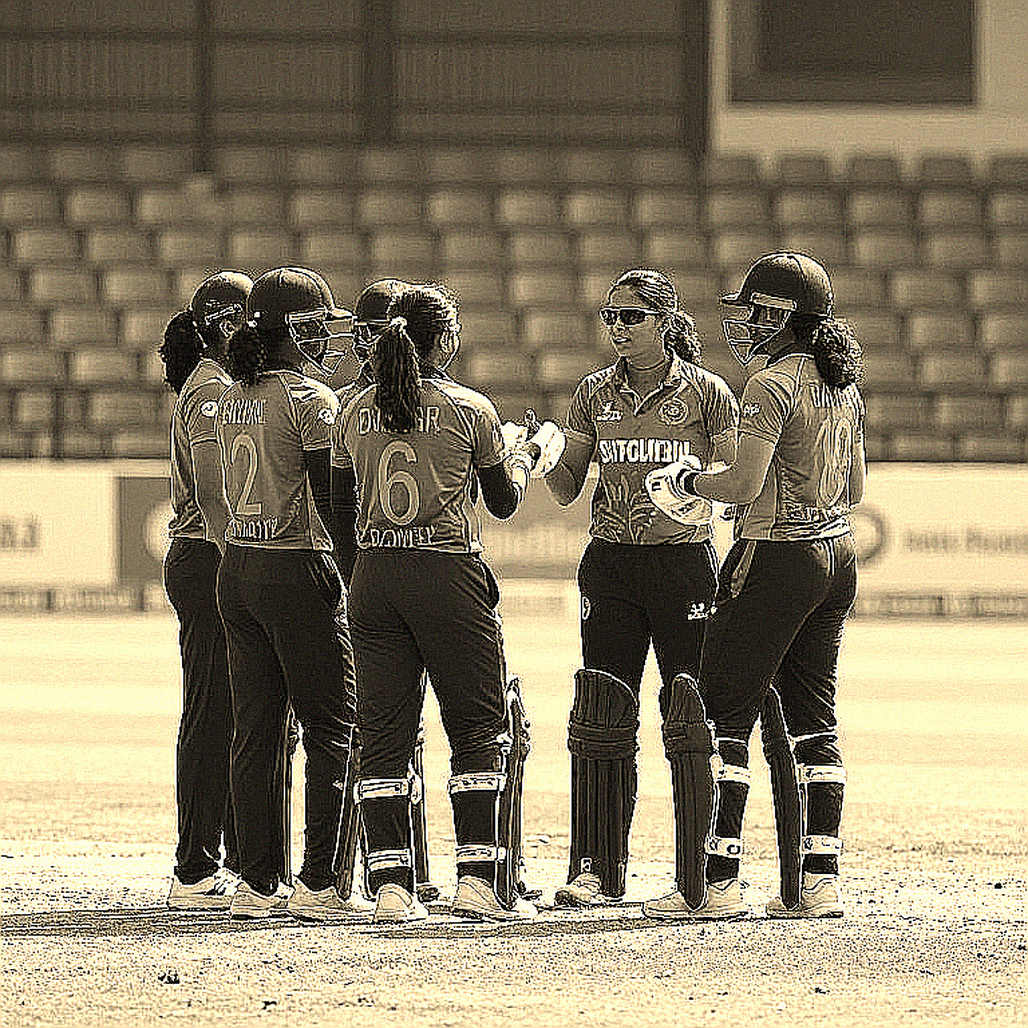
Madushanka's 5 for 34 is the product of a plan, not a lottery. The report is explicit that he repeated the short ball across two separate spells — first against Fakhar, then the same short-ball tactic in a second spell against Minhas. A bowler who returns to one weapon, deliberately, against different batters, is not guessing. He is executing a scouting report. Left-arm angle, short ball, and an inswinger is a scarce and expensive combination in ODI cricket.
Third, the detail that usually gets skipped: the wickets were spread across five bowlers. Madushanka five, Arachchige two, Asitha Fernando one, Eshan Malinga one, Wellalage one. Pakistan were not dismantled by one man; they were squeezed by an entire attack. Seam and spin applied pressure from two angles, and that is why no partnership survived the middle. The seventh-wicket stand of 27 was the largest of the innings, and that sentence is the whole post-mortem.

Babar Azam made 29 off 33 balls. Read superficially, that is the top score, therefore a success. Read against the ledger, it is a warning. In an innings where the premier batter faces only 33 balls and the team is bowled out for 110, 29 runs is not a rescue, it is evidence of isolation. When Babar fell to a reviewed nip-backer, the innings had no second gear to shift into. That is structural dependence, not a one-day form issue.
Do not leave fielding out of the equation. Kamindu Mendis's low catch at slip and the report's description of fielders throwing themselves about indicate that part of Sri Lanka's bowling figures was created by the field. The distinction matters, because catching form regresses faster than bowling skill.
And one detail the commentary circuit routinely skips: Pakistan spent both reviews on Maaz Sadaqat and Babar Azam, and both returned three reds. Not wrong appeals — correct appeals against correct decisions. The consequence was that Shadab Khan could not challenge the glove off a sweep. That is not an umpiring controversy; it is a resource-management lesson. A review budget is as much a match variable as wickets in hand.
Contrarian
First, what the crowd has right. Being bowled out for 110, posting the second-lowest home total, and finding only three double-digit scores all establish that the batting failed that day. No softening required.
The second step needs care. Judging a team's batting quality from one innings is the same error as judging a career from a single auction price. In March 2026 at Eden Gardens I logged a collapse from 98 for 1 to 120 for 8 by hand. That one began in the top order, under the pressure of a chase, against a target. Today's collapse has a different architecture — middle overs, first innings, no chase pressure. Calling both the same disease is convenient, not correct. The old memory is a baseline here, not a benediction.
Third, the surface question. If this was a fresh strip with early moisture keeping seam alive, then a slice of the second-lowest-home-total statistic belongs to the pitch, not the batting. That is not an excuse; it is a verification agenda. Watch the same team's next innings on a flat deck.
Fourth, the five-for. The plan was sound; I have argued that above. A single five-wicket haul still does not confer world-class status. The real story of Sri Lanka's seam group is not in the five-for column but in the five-way wicket spread. A system win repeats more reliably than an individual win, and the rest of the tournament will show that difference.
Takeaway
Those who close this match as the arrival of Madushanka will have closed the wrong file. My next three observations sit here: how Pakistan's top order responds to the short ball the next time it is tested; what Madushanka's economy looks like across the next three to six matches; and which direction Babar Azam's strike rate travels under pressure. If Sri Lanka complete the chase, England's exit rewrites the tournament's commercial shape, and the headlines will migrate from batting technique to the colour of the final.
Paper remembers what administrators forget, especially when the columns refuse to reconcile. The 91 for 8 column is refusing today.